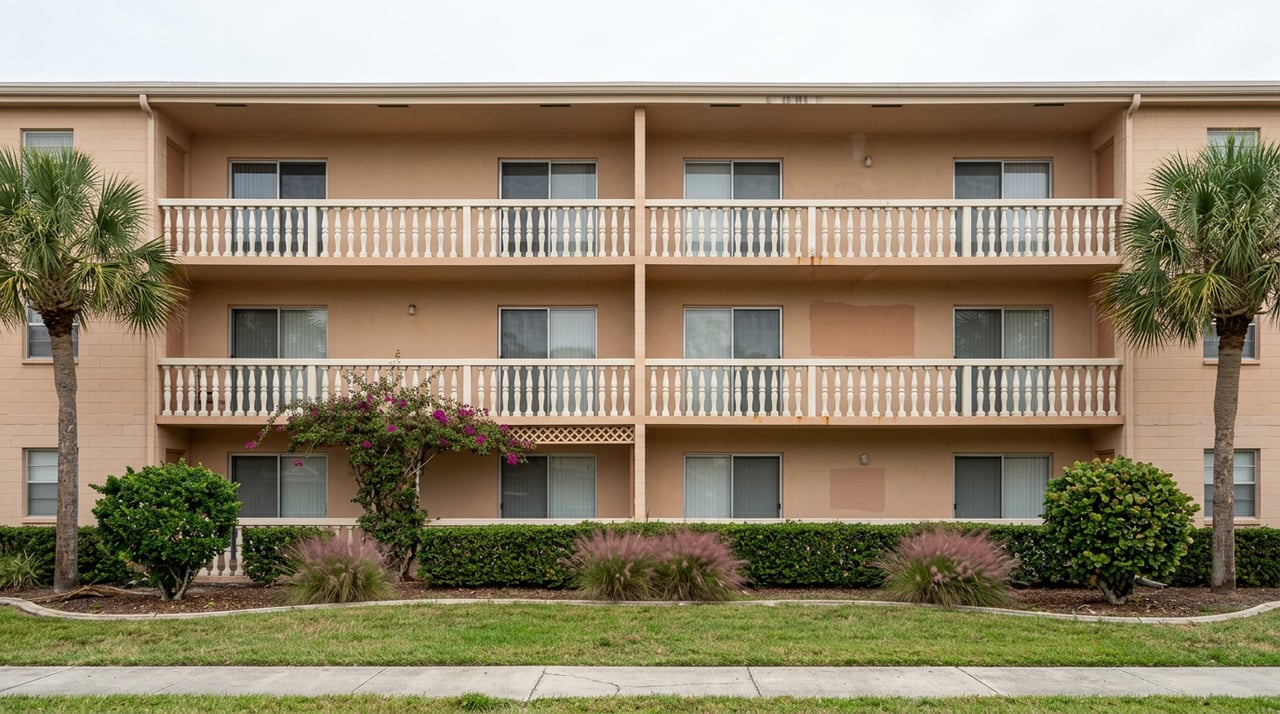
A buyer's estoppel certificate arrives late in a Siesta Key condo transaction, often within the final days before closing, and it can reveal a special assessment nobody mentioned in the listing. The board approved it months earlier. It sat in meeting minutes nobody had asked to see. The listing didn't hide it. The seller didn't lie. The information was simply never requested, because the buyer was comparing price per square foot, not construction dates.
That gap between what a listing shows and what an association owes is not new to Florida condo buying. What changed is the size of the number waiting on the other side of it, and the date that made hiding it illegal.
The reserve waiver is gone
For decades, Florida condo associations had an escape valve. If dues felt too high, owners could vote to waive or underfund the reserve account and keep monthly costs artificially low. Roofs aged, plumbing aged, concrete aged, and the bill got pushed to whoever owned the unit when the bill finally came due.
The Florida Department of Business and Professional Regulation says that valve closed on January 1, 2026. Associations can no longer vote to waive or underfund reserves for the eight structural components a Structural Integrity Reserve Study covers, and full funding of those reserves must now be underway. The accounting is no longer theoretical: it is either funded or it is a documented gap that has to be closed, often through a special assessment levied on current owners.
A parallel law, House Bill 1021, now requires associations with 25 or more units to post governing documents, budgets, and reserve studies where owners and prospective buyers can actually see them. That is a real improvement over the old system, where this information lived in a filing cabinet at a management office. It also means there is no longer an excuse for a buyer's agent not to have pulled it before writing an offer.
Why the building's age is the number that matters
According to Mosaic's 2026 Florida condo milestone inspection guide, Florida's milestone inspection requirements apply to condominium and cooperative buildings that are three habitable stories or taller, with the first milestone inspection due at 30 years of age, or 25 years for buildings within three miles of the coast. Nearly all of Siesta Key sits inside that three-mile line.
That single fact splits the island's condo stock into two very different ownership experiences.
Walk the Village or the stretch of Midnight Pass Road toward the south end and you're looking at buildings from the 1970s and early 1980s. Midnight Cove was built between 1977 and 1980. The Pointe on Midnight Pass dates to 1975. Turtle Bay went up in the 1980s. Casa Siesta was constructed in 1974. Every one of these is now well past the 25-year coastal trigger; for buildings that are three habitable stories or taller, the milestone inspection and reserve study aren't a future event. They're either already complete, in progress, or overdue.
Compare that to newer luxury towers built after 2000, which may not yet be subject to these requirements, depending on when their certificates of occupancy were issued.
Two condos can list at the same price on the same street and represent completely different financial commitments, and the difference has nothing to do with square footage, view, or finishes. It comes down to a construction date that most buyers never think to ask about until the estoppel certificate shows up.
What the inspection itself costs, before any repairs
A milestone inspection has two phases, and the cost swings wildly depending on which one gets triggered.
| Stage | What happens | Typical cost |
|---|---|---|
| Phase 1 | Visual structural examination by a licensed engineer | $8,000 to $25,000 for smaller buildings; $50,000 to $150,000+ for large high-rises |
| Phase 2 | Triggered only if Phase 1 finds substantial structural deterioration | $40,000 to $250,000+ |
Those figures cover the inspection alone, not the repairs a Phase 2 finding requires. If a Siesta Key building's Phase 2 report flags deteriorating concrete or a failing waterproofing membrane, the association has 365 days to begin repairs, as GoverningDocs explains, and that cost gets divided among owners through reserves, a loan, or a special assessment. Industry guidance on the 2026 reserve mandate puts realistic special assessment ranges for underfunded buildings anywhere from $10,000 to well over $100,000 per unit, depending on what the structural findings actually are.
The insurance and financing angle most buyers miss
The SIRS requirement isn't just a board's problem anymore. Many private carriers now request the SIRS summary or a compliance affidavit before they'll even quote a policy.
Lenders have their own version of this filter.
What to actually request before removing contingencies
None of this shows up on an MLS listing. A buyer or their agent has to go get it directly from the association.
- The most recent milestone inspection report, including whether Phase 2 was triggered and what it found
- The current Structural Integrity Reserve Study and its funding schedule
- Twelve to twenty-four months of board meeting minutes, which is often where a pending assessment surfaces before it becomes official
- The master insurance declarations page, to see whether the policy is bare walls or single entity coverage and what the wind or hurricane deductible looks like
- The estoppel certificate itself, which discloses any assessment already levied against the unit
The estoppel certificate often doesn't arrive until close to closing. Requesting the reserve study and board minutes earlier gives a buyer time to negotiate seller credits, adjust the offer, or walk away rather than discovering the number three days before signing.
A quick way to think about it
If a Siesta Key condo building is three habitable stories or taller and was built before the early 1980s, assume the milestone inspection and SIRS conversation is already happening at the board level, whether or not it's mentioned in the listing. If such a building was built after 2000, check its certificate-of-occupancy date to determine when these requirements apply; its age does not rule out special assessments for storm damage or normal capital projects.
Either way, the building's age tells you more about your real ownership cost over the next five years than the price per square foot does.
A few questions worth asking directly
Does this apply to single-family homes on Siesta Key? No. The milestone inspection requirements apply only to condominium and cooperative buildings three habitable stories or taller. Single-family and low-rise homes under three stories fall outside this law entirely.
If the listing agent says the building "already passed inspection," is that enough? Ask for the actual report and the reserve funding schedule that came out of it. A passed Phase 1 inspection with an underfunded reserve account can still mean a significant assessment is coming, just not one tied to an urgent safety finding.
Can a newer building still hit me with a special assessment? Yes, under the Florida Statutes, associations can still vote to waive reserves for non-structural items like pool equipment or landscaping. Those assessments tend to be smaller and less frequent than the structural ones driving headlines in older buildings, but they're not eliminated by the building's age.
Buying on Siesta Key still means buying into one of the strongest beach markets in the state, but the paperwork behind the price tag now carries real weight. If you're comparing units and want a second set of eyes on what a specific building's reserve position actually means for your offer, Timothy Perkins can walk through the documents with you before you're the one reading a surprise number in an estoppel certificate. Let's Connect.
This article is general information, not legal, tax or financial advice. Consult a qualified professional about your situation.